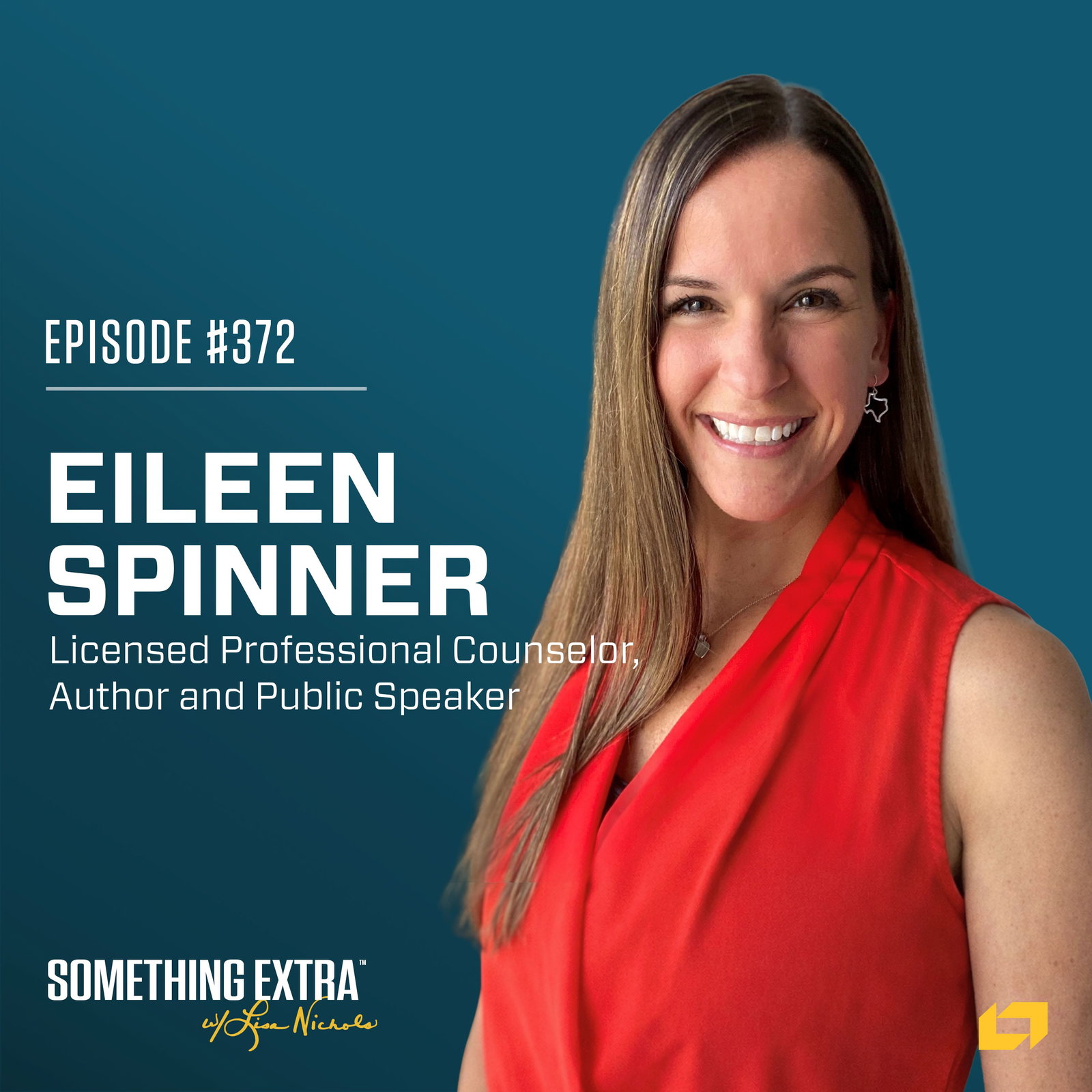
The Gift of a Tangible Legacy w/ Eileen Spinner
Episode Details
Transcript
In this episode, Eileen Spinner, Licensed Professional Counselor, Author, and Public Speaker, reveals how capturing a person’s story can become a profound tool for healing and reconciliation. Eileen details her work with the Lumina program, creating tangible legacy pieces that ensure a person's light continues to shine for future generations. This conversation is a beautiful reminder that every leader has a unique gift to share and that our stories are the most valuable inheritance we can leave behind.
Guest Links:
- Books:
- Mom, Tell Me Why You're Catholic and Everything Else You Love: A Faith-Based Guided Journal
- Dad, Tell Me Why You're Catholic and Everything Else You Love
- Friend, Tell Me About Your Faith and Everything Else You Love
Credits: Host: Lisa Nichols, Executive Producer: Jenny Heal, Marketing Support: Landon Burke and Joe Szynkowski, Podcast Engineer: Portside Media
Lisa Nichols
Chromosomes. Little strands of nucleic acids and proteins are the fundamental genetic instructions that tell us who we are at birth. Most people are born with forty six chromosomes, but each year in the United States, about six thousand people are born with an extra chromosome, making them a person with Down syndrome. If you've ever encountered someone with Down syndrome, you know that they are some of the kindest, most joyful people you will ever meet. They truly have something extra. My name is Lisa Nichols, and for thirty years, I have been both the CEO of Technology Partners and the mother to Ali. Ali has something extra in every sense of the word. I have been blessed to be by her side as she impacts everyone she meets. Through these two important roles as CEO and mother to Ally, I have witnessed countless life lessons that have fundamentally changed the way I look at the world. While you may not have an extra chromosome, every leader has something extra that defines who you are. Join me as I explore the something extra in leaders from all walks of life and discover how that difference in each of them has made a difference in their companies, their families, their communities, and in themselves. If you like this episode today, please go to Apple Podcasts or wherever you listen and leave us a five star rating. Lisa Nichols
Before we get started, I'm excited to share that my book Something Extra is now available. It is rooted in the remarkable spirit of our daughter, Ally, and the heartfelt conversations we've had on the podcast. You'll find wisdom and practical tools to ignite the leader within you and uncover your own something extra. Visit something extra book dot com or find it at Amazon or in all major bookstores to order your copy today. I'm excited to have Eileen Spinner on the show today. Eileen is a licensed professional counselor, author, and public speaker. Well, Eileen Spinner, welcome to the something extra podcast. I'm so excited today to have you on the show. Thank you so much for making the time. When you and I met, I said, oh my goodness, Eileen. You've got to come on to the something extra podcast because I love what you do, and we're gonna get into that. So thank you so much for making the time. Eileen Spinner
Oh, gosh. Thank you. It's an honor. Lisa Nichols
Well and I always tell our listeners this, you know, because they always wanna know, how do you get connected to your guest? And we have to give a shout out to our mutual, beautiful, amazing, incredible friend, Becky Feldman. Yay, Becky. Eileen Spinner
Amazing. Yes. We love you, girl. Lisa Nichols
Yes. She's like, oh my gosh, Lisa. You've got to meet, you know, Eileen, and we'll talk about it because she knows that you know, she knew that I had the podcast. And then, also, like, your son, and we'll talk about Austin, your son that's a sophomore that's a really good piano player. And she knew that sometimes we hire, you know, and she goes, you might wanna hire him sometime for some of your events. So we'll we'll talk more about that. But I know he's incredibly talented. But, you know, Eileen, you're a licensed professional counselor, author, public speaker, and you worked for the BJC hospice for twenty years leading their, hospice program. And, this is what was so thrilling to me is that you capture people's stories. Yes. So and we're gonna talk a lot about that. But, you know, let me take you take us back. So I know that you're a native Texan. So you even said your patients were saying, hey. We know that you're from Texas, so you don't have to come out in the snowstorm that we're having, but Texas got it too. Eileen Spinner
They did. Yeah. Yeah. Lisa Nichols
Which is so unusual. Right? But when did you first sense that walking with people at the end of life was really part of your calling? Eileen Spinner
Oh, gosh. Yeah. So it might sound hard to believe, but when I was working on my master's in counseling at Saint Louis University back in two thousand five, which seems so long ago now, I was trying to figure out what kind of counselor I wanted to be. And I always thought maybe, like, pastoral counselor, something with spirituality. And I literally read a book, by Ira Byock called Dying Well, and it was about hospice and end of life care and this interdisciplinary team that takes care of not only the patient but the family. And it was just like this lightning bolt. You know? It was like a god wink. God was just like, this is this is what you're supposed to do. And all the pieces fell in place from there. You know? There was just nothing more spiritual than end of life care. And I got an internship at BJC, and here I am literally twenty years later. Lisa Nichols
Oh my goodness. Oh, that's so beautiful though. Right? You know? Because sometimes people search their whole life Absolutely. For that purpose and calling. Eileen Spinner
Yes. I feel I feel very blessed to be living my calling. You know? And This is your calling. Yeah. Really living it. Lisa Nichols
Yeah. So beautiful. Well, I love that because, you know, you said you might do pastoral care or, you know, counseling, that sort of thing, because I know that you have a theology degree Yeah. From University of Dallas. Right? Eileen Spinner
Yes. Yes. Yeah. So I yes. I grew up in Dallas. My I have children brothers. My parents brought me up in the Catholic faith. I actually I don't know if this was intentional or not, but I went to Catholic school from, like, kindergarten all the way through my masters. And, you know, just the values that my parents instilled in me from a young age. Even today, my parents are eighty one, eighty four. I'm very blessed that they're still alive. You know, they always just taught us to lean on our faith, family. They were both the type of people that really served others. My dad was a air force reserves colonel, psychologist, a school psychologist. My mom was a nurse and then a stay at home mom, and she actually ran a food pantry, a not for profit for forty probably forty plus years. And so, you know, I grew up volunteering. I grew up being in the church at the food pantry. I joke that I've been volunteering at that food pantry since I was born, which I really was. You know? But I think, you know, all of that kind of led me down a certain path. And then when I got into college, I really was fascinated with theology, all different religions and learning about them. And I thought maybe I'll be a theology teacher, you know? And I found that a lot of my education courses were psychology. And so, again, it was like God kinda wind in that path, and I ended up kinda switching into more of a counseling mode. So I did my undergrad in theology and then, did my master's in in counseling. Lisa Nichols
But, boy, I mean, talking about preparing you, right, for what you're doing today because I'm sure you lean on that lean on that even. Eileen Spinner
Yeah. And even, you know, those volunteering with people of all backgrounds, ages, you know, a lot of older ladies and men from different churches. You know, I just was so comfortable with different people. And so it made sense, when I look back that, you know, I was like, okay. I can do this. I can work with people of all different backgrounds and ages and, you know, help them in whatever part of life they're in. Lisa Nichols
Yeah. That is I love that. That is just so beautiful. Well, we was there a moment, like because then you started doing that. Right? And you interned for BJC and then you ended up staying there. Was there a moment when you realized that this is holy ground? I mean, the work that you are doing, Eileen, is really sacred work, I believe, you know, and so meaningful, not only to the person, that's at end of life, but I think maybe even more importantly to the people that are left behind. Eileen Spinner
Yes. Oh, so true. Gosh. When did I feel like I was on holy ground? I think immediately. You know? I people describe being and if, you know, if you've had losses of your own, it's kinda like this they've described it as like that's this thin veil, right, between life and death. And so being in that space, it's like holding a newborn. You know? Like, you appreciate this, fragility of life and being you know, seeing someone's soul and just the beauty of, you know, birth and death. And so I think I immediately felt very humbled to sit with dying people. And then supporting their family members, you know, I realized really quickly I just needed to be present. I just needed to be there with them. You know? I think a lot of times when we have someone in our own life that's, sick or dying or, they're the person supporting that person, we don't know what to do. But really Right. Show up. You just have to be there. There's a really great grief author and speaker named Alan Wolfell, and he is known for coining kind of the word companioning. And that's what we're doing. We're companioning. We're just being present. I think of one lady, that I worked with in bereavement on the grief side. And I remember her saying one time, you know, I don't know what you did, but I feel so much better. And I've had people say that and I always tell them I didn't do anything. You did I just stood next to you and walked alongside you. You did the work. You worked through your grief. And so we we went with you. I wish the whole medical world worked the way hospice does because you really like you said, you're helping the patient and their family. Lisa Nichols
Absolutely. Yes. Absolutely. Well, you know, so let's talk about what you do in particular. You help people tell their stories. Mhmm. Right? And journal, and it's just it's so you you put together a book, basically, right, of their of their stories. And and, obviously, you know, you kinda wanna start the process while the person is still coherent too. Right? You know? Yes. But why do you why do you think the stories matter so much, especially then at the end of life? Eileen Spinner
Yeah. I think, it was funny. I just was reading a quote the other day that, it was just kind of going through, Facebook and John O'Leary, who we all in Saint Louis know and adore. And love. Yeah. He had written about how, our stories, you know, are part of our life, but it's not what defines us. It's like what we do next with what's happened. You know? And I think giving people an opportunity to tell their story is is such a gift because then they get to say this is how I wanna be remembered or this is what I want you to know about me. I always tell patients and families when I'm doing this work or when my volunteers are doing this work that we're trying to capture your essence, You know? And, there's this concept of, like, two deaths. We have our physical death when our heart stops and our actual death when people stop talking about us. And so to be able to have that opportunity to say, this is what I want to be remembered as, That's such a gift to the patient because then they feel like, okay, I might die, but now I can help my family after my death. And it helps the family because then they're getting something tangible that they can hold on to. And, you know, whether it's a, you know, a bear made out of clothing or a book or a letter or just a quote, whatever it is, they might read that ten, twenty, fifty years from now and say, okay, I feel my mom or I feel my husband or my daughter, you know, and that's really special. It's it's just such an important thing. Lisa Nichols
Mhmm. Yeah. I think I had told you when we met, my mom passed away in twenty fourteen, and it really kind of there were probably signs, but she really kinda was passing off the signs as arthritis or something. And Yeah. So she went into the hospital in June and passed in August. So I pretty much, like, stayed at her bedside, you know, in Kentucky for that time and not really knowing. I mean, not not even have met you at that time, but, you know, what was so therapeutic to me is just writing. Eileen Spinner
Yeah. Lisa Nichols
And at the time, we had, our grandson was eighteen months old. And I just remember the thing that made me so sad was that Sawyer was not going to know my mom. Like, I knew his mom and, like, his mom knew his my mom. Right? And it was just it was very therapeutic for me just writing, you know, and I would ask my dad stories. And then, you know, I would talk to my mom and ask her stories. And then her her sisters that would come in, I would just Yeah. Gathering. You know? Eileen Spinner
Did it naturally. I did it as a volunteer. No. Lisa Nichols
And you know, and I found out stuff about my mom literally that I had never known. Eileen Spinner
And you know, that happens so often. That happens so often. I I can't tell. Even with my own family, I remember I was creating some new tools and one of the tools was like a list of favorite things. And I was like, you know, I don't even know this about my own parents, so I made my parents do it. I was like, hey, if I'm needing this program, I gotta see if this works. And so I made them do it. And my mom, you know, she's not as super athletic. Like, she doesn't work out kind of and she was saying my favorite sport was skiing. I'm like, mom, we grew up in Texas. Like, what are you talking about? She's like, well, when I was in nursing school in Boston or Boston, in Denver, I just absolutely love skiing, and it just brought out all these stories. Lisa Nichols
Lord, you're right. Yay. Yeah. Well, I remember my my dad telling me that my dad was a marine, and when they came back from the service, he bought this little red sports car. Now my mom was eighty one when she passed away and never got a speeding ticket in her whole entire life, Eileen. I mean, she my mom was a rule follower. You know, she would keep my my dad on his own business. She kept his books. And if she was a nickel off, my mom would find it. I mean, she just, like, she was just played by the rules. But what I found out from even her sisters, it's like they would, like, see this flash of red going down the road, and it was my mom in this little red sports car. And I'm like, you've got to be kidding. My mom has never had a speeding ticket. Eileen Spinner
So I think your mom and my mom are sisters because my mom has never had a ticket either. Knock on wood. And she was like a Lisa Nichols
little speed demon. That is so funny. Oh my gosh. So neat. Well, let me ask you this. Wait. Are there themes that show up time and time and time again with people when you're pulling out their stories, Eileen? Regardless of background, are there things that show up, Eileen Spinner
that are kinda common with everyone? Right. You know, I think, you know, when you're at towards the end of life, things sometimes for the patient like you're saying, for the family, it's hard. They're losing their loved one. Right? And no one wants their loved one to die. But Yes. I think for the patients, a lot of times, it's just, honestly, love. You know? Like, they just want to love everyone they love. They want to be loved. They wanna be remembered for the love they gave. There's always a lot of gratitude. You know, I think, I think years ago before I really knew about hospice when I was very young, I thought, oh, you know, if I died, I hope it's really quick and there's no pain and, you know, you don't but then when I learned about hospice, I was like, gosh. What a gift, right, to know, to have time to say, okay. This is how I'm gonna use today, or this is how I'm gonna use this week. And so I do see just that simplicity of, like, love and gratitude and family and just the simple joys. Right? And I see that so many times with families. They don't you know, they may have traveled the world, but they're not worried about necessarily talking about all of it. They just Yeah. They're just happy to to be snuggling on the couch with their grandkids or with their daughter or whoever. So yeah. Lisa Nichols
Oftentimes, it's joy. It really probably brings into, you know, full focus the things that really matter most. Eileen Spinner
Absolutely. Lisa Nichols
You know? It's not about your accomplishments. It's not about what you've done or you've achieved in life. It's not about what's in your bank account. Right? It's about the people and Who you are. Yeah. And who you are. So the Lumina life review program is what it what it's called. Yes. You know, once you created I I read this. Once you created a book that was, I think, one of the largest memory books in history in the program's history, and it was Irma. Yeah. Irma. Yeah. Yeah. Tell me about that. I mean, what you know, I mean, she just had so much to say or Eileen Spinner
people are Well, you know, so she so just for people that don't know about Lumina, so there's so many different hospice programs across Saint Louis and across the country, but BJC is very blessed to have donors. And Suzanne Doyle, who started the program almost twenty years ago, she was really a visionary. She started Lumina because she thought it comes from the word luminous light. She's like, we need to shine a light on people. We need people to share their life, and what's important to them. And so the the Lumina program itself is really like life review and legacy creation. So sometimes you just do life review and and the patient may pass and you don't get to make anything. You know? Sometimes you do get to make that legacy piece. In Irma's case, you know, she, she had had a we had done a whole story on her because it was really a a miracle. She actually wanted to be called miracle lady, because she was. She had had a traumatic brain injury coming home from volunteering, actually, at Barnes Jewish Hospital. She had volunteered for, BJ BJC for a long time, and it was during ice and she slipped on her step. And if the mailman hadn't randomly changed his, route that day, he wouldn't have found her. He actually was the one that found her. They rushed her to the hospital. She, ended up coming on to hospice. They weren't sure if she would recover. They said, you know, there's a very small chance after six months she might get better. And so during that six months, I met with her daughter almost weekly. She'd have pictures of her mom, of her life, of everything she'd gone through. Irma would tell me stories, the daughter, sometimes even the son, other people would join in and tell stories about her. Her. So we had this giant book growing about her and her life and her family and her career and everything. And then she started to get better, and she actually went off of hospice. She's actually living independently again in her home. It's amazing. She's and and so, you know, that was a giant book. We we real and it's beautiful because now she has this book, and I told her we gotta add an epilogue one day, so she could add, you know, the last couple years to it. Sure. But, you know, just amazing. And I've and we've written quite a few giant books. I'm grateful for my volunteers to make that possible because we have a lot of patients that have amazing stories. We've even had veterans that have turned their books into library of congress, so it's really a part of permanent history, which is incredible. Oh, man. Stories and things like that. Mhmm. Yeah. Lots of beautiful, huge books, even little things. I've had visits where I just help them write a thank you to their loved ones, and that's it. And it's just as powerful. Lisa Nichols
Yeah. Mm-mm. Well, let me ask you this. Because I'm thinking as you're hearing these stories, I've often thought about pastors and doctors. Eileen, you know, you have your own stuff that you're carrying, but you also are carrying like, if it was if if it's a case of a pastor, they're carrying the burdens, if you will, the burdens and the joys of their flock. Right? Eileen Spinner
Yeah. Sure. Lisa Nichols
And so you're hearing these stories. I mean, how has that been for you? Does it ever become overwhelming to you to be carrying all these stories within you? Eileen Spinner
Sure. So I think, you know, all counselors would say, yeah, you carry things sometimes. You know? And, there are times where it's hard, of course, but, you know, our goal, especially in hospice, is to go in there and just make it a little easier, right, to walk with them. I tell people if it's there was my husband or my kid or my mom, I would need someone else to come in and do this. You know? I wouldn't be able to be the professional. I need to be the wife or the mom or the daughter. But even with my volunteers, you know, I always tell them we we all have a a talent and a role, something that we can give these families. And so that's our job is to go in there and help do that. And so the job can get heavy. When I when I was thinking about this, I was thinking of one situation in particular. I back in twenty twenty two is after COVID. You know, the heaviness of COVID really, I think all of us. Right? And I remember driving to this young patient with young children, and I thought, I don't know if I can do this. And I just was like, oh, no. I thought the thought that's, like, the end of my job. Right? And I thought, okay. Buck up. Go visit this lady. You know? She she needs you. And at the time, we still were wearing our masks and everything. And I was asking this mom, we were making books for her little girls, and I asked her, what advice do you have for your daughters? And I they were so young. I thought she'd say be kind or loving. Very simple, you know, for little kids. She turned to me and said, be authentic. And the reason that hit me so hard is that was my word that year. My word for that year was to be authentic. And so of course I'm smiling under my mask. And I was like, oh, what does that mean to you? Why would you say that? And she had no idea what that meant to me in the moment. And she and her husband also joined in. They said, you know, if you're not sharing your gifts, if you're not being who God made you to be, then what is the point? You know? And I was like, okay, I get it. Right? Okay. I'm having a hard day. That's alright. You know? So Yeah. So, yeah, it can get very heavy sometimes, but, you know, that's when you lean on your, you know, your your your family, your friends. I have the most amazing incredible team in hospice, and so we all lean on each other. We actually call each other, the geese. And so you think of, like, a geese formation. You take turns at the front, and you lean on each other, and you help each other. And so we we do that. You know? We we do that when we have those hard days. And I remember leaving that leaving that house and and calling one of them and being like, you're not gonna believe this. She said my she said my word. It was just like, okay. God God wink again. Like, I get it. Lisa Nichols
That's that's the message. That's the message. Yeah. Oh. Yeah. Goodness. Well, yeah, I want you we're gonna need to take a quick break here in a minute, but there are two two people, that you had sent me a note about, Ruth and Jory. Yes. And especially Jory because that touched my heart. Jory had Eileen Spinner
I knew it would. Lisa Nichols
A little boy with Down syndrome. Right? So tell me a little bit about that story. Eileen Spinner
Yeah. So, again, another patient that I thought, oh, I don't know if I can do this. We were actually, like, the same age. Had kids or I had kids around the same age as her little boy at the time. And I remember asking my volunteers, you know, who would like to take on this wonderful patient? Nobody offered it. So I was like, okay. This must be mine, and I was so grateful she was mine. She was very young. She had paraganglioma, which is a very rare disease, and I promised her I would always share her story. I was part of her legacy. And she actually got pregnant. She couldn't she didn't even think she could get pregnant when she was under treatment, and she did. And she had a choice. She could, you know, stop treatment or keep doing treatment. If she kept doing treatment, she'd be able to keep the baby. And so she stopped her treatment so that she could have him, and she did. And he's wonderful, sweet little thing, and he was born with Down syndrome. And she was about a year old when we met. And so when I met her, we made birthday cards for every birthday up until twenty one. We made, an a b c book. So she wrote out, like, a is for this, b is for this, and some of them were so beautiful. She picked, like, q is for quote, and she did this doctor Seuss quote about, how, you know, you are you, there's no one greater than you. So this sweet little quote. And and so actually that and my volunteer who's an artist made hand painted book for her from it, and it was just gorgeous. And the volunteer actually went and actually made a canvas of that page because she knew that she loved it so much. We made oh, and one one, she picked z is for zebra, and she said just like the zebra, you are unique. And she picked that. She said that zebra has that extra chromosome that makes him so special and perfect. And I just thought, what a mother. And she care you know, so she was able to be there for him through all these little gifts, you know. And as she was on hospice, we helped her do so many things around Saint Louis. Volunteers were donating tickets to all sorts of stuff so she could make memories as many days as she felt good. It was so powerful. So Oh, Lisa Nichols
now I'm crying. She Eileen Spinner
yeah. And her mom her mom even started volunteering for us after. So I do hear from her sometimes. And then if I'm doing a talk and I mentioned her, I always say, hey, I'm carrying Jory with me, and she's still touching people's lives. So I think that makes a difference for her to know that her daughter's still making a difference. Lisa Nichols
Absolutely. Yeah. Oh my goodness. Well, Eileen, we have so much more to talk about, but we do need to take a quick break, and we'll be right back with Eileen Spinner on the Something Extra podcast. AD
In business, the tendency is to seek out partners who are bigger, faster, stronger. When it comes to IT, you should be looking for smarter, faster, better. That's just what you'll find with the talented technologists at Technology Partners. Our experts develop custom solutions to tackle your most complex challenges, all to simplify your processes in the smartest, most efficient way possible. The time to be swift and nimble starts now. Go to technology partners dot net slash solutions and see what's possible. Lisa Nichols
Welcome back, everyone, to the Something Extra podcast with my friend, Eileen Spinner. So, Eileen, how has walking with people at the end of their life shaped your faith? Eileen Spinner
I would say it has strengthened it amazingly. I've really learned to kinda just trust in God more than I ever had before. Right? Like, just lean on him. Let him guide me. I know I can't do it by myself. Right? And I think, doing this kind of work has kind of had a, like, a sense of urgency to just be there for others. Right? Like, to be a light to others because if you're working with folks who are dying every day, you realize, like, we don't know our day and time. Right? And so, it really has strengthened my faith immensely. There's a there's a quote from pope Francis where he talks about, the saints and the church, how they he kinda compares them to the stained glass windows of a church and how the light shines through them differently. And there's different colors, different hues, and I think all of us are like that too. And so he talks about each of us have our own light to share. And if we don't do that, then what are we doing? Right? So I think that's really for me. I I'm just like, okay. I'm just gonna do what I can every day to share that light. Lisa Nichols
Yeah. Oh, no. That is so beautiful. I love that. Well and then the other thing as you were talking, Eileen, I was thinking about is you talked about none of us know the day or time. Right? I mean, it's appointed once for a man to be born and once for a man to die, man or woman to die. And I'm thinking when you were reminded of this so often, it probably reminds you to live more in the present. Eileen Spinner
Oh, yeah. To make Lisa Nichols
sure that you are present where your feet are planted Yeah. That day, right, with your family. Because I just know, like, I feel like the world is so noisy and can be so distracting. And we know in our hearts what's what's important, but my goodness, how many times do we get pulled by the world and what the world's telling us we need to be doing or should be doing. Right? And, yeah. Eileen Spinner
And I think, you know, as moms, I think a lot of times we're trying to do and be everything. And and I I have to watch that. You know? I have to make sure I'm not too exhausted at the end of the day that I am present to my kids. I I just watched something recently where mom was talking about that. You know, we we work and we're doing all sorts of different things that fill us. Like, we gotta make sure we don't empty that that out too much or we're not there enough for our children. And people used to tease me. You know, we we used to go on a lot of different vacations. We we still do. I mean, our kids are a little bit older now, so they're busier. But they're like, gosh, you guys are always doing stuff. I'm like, well, you know, carpe diem. Lisa Nichols
Yeah. We're always Eileen Spinner
we're always trying to do stuff. Yeah. Lisa Nichols
Yeah. That's so good. You know, what what questions I mean, you've been doing this work for twenty years. I mean, what questions do people have about God, you know, or meaning? What what are some of the questions that they most often ask, Eileen? Can you think of a few? Eileen Spinner
So, you know, I I often find that and they may share it more with the chaplain, but I don't get as many questions about God. They might share just kinda more what they think is coming or or what they hope is coming. But I think there's I always have this sense of peace that comes from folks when they're in that space, where they know that this is coming, they've accepted it, and there's kind of this peace and joy there. Now the folks that are kinda struggling with what's next or, you know, where's God in this, you know, I think that's where it's beautiful that we have this interdisciplinary team to come in there and help them figure out what that is. You know? And, the chaplains probably, you know, work with that more than I do where they just kinda help them find a piece there. Again, it kinda goes back to that. Like, this is your story. This is, you know, what you decide to share here. I think of one lady I worked with who had a very hard, hard life, and her, you know, ninety some odd year old mother who was very abusive was still alive, you know, and she wanted to share her story. And her goal was to find peace and reconciliation in that relationship. And so she knew a lot of hard things, but then we had to figure out what do we write that helps you achieve that goal. And I she was like, this is the best therapy I've ever had. Now it wasn't meant to be therapy, but it was because it was therapy for her to find peace in all of that. So, you know, everyone's unique in their religion and spiritual process, but I think people kinda find that peace somehow. Lisa Nichols
Yeah. Mhmm. That's beautiful. Well, I wanna get into your books. Yeah. Because now you've written a couple of books. You've got another one coming out. Did it just come out? Yay. That is so awesome. You know, and Eileen Spinner
I have your book here too. Lisa Nichols
Oh, look at you. Eileen Spinner
I'm almost I'm almost done with it. It's really good. Lisa Nichols
Oh, thank you. Thank you. Thank you. That makes me really happy. But your books invite parents to share not just their beliefs, but their heart. You know? And, you know, what do you hope that the children, you know, possibly, siblings, the people that are left behind, what do you hope that they receive when they read those words that are written there in those books? Eileen Spinner
Oh, gosh. Yeah. So, you know, I think about when families get together, you know, we all tell stories. And I don't know about your family, but I think a lot of families tell the same stories a lot of times. Lisa Nichols
Over and over because they can't remember. Right? Eileen Spinner
They're like, you know, the fish the fish gets bigger or, you know, it's just it's so funny. Or even like you said, you find out something new because someone tells the story a little different or to a different person. And kinda that's the beauty of Lumina is, like, myself and the volunteers will come in there, and we're just these new ears, these new faces. And so people just, like, light up and can't wait to tell you all of them. Right? And so we write them down. And so for the families that read that, you know, immediately or years later, it's an like, an opportunity for them to connect with that person. You know? Mhmm. It gives them something tangible that they can hold on to or even kind of open and feel their essence. I think of a a mom who had a young daughter, that that died years ago, and her daughter was so artistic. I mean, everything from, she would, like, paint menorahs. She would, she had, like, pottery, all different kinds of art, and it was all over her house. And she's like, what do I do with this? It's everywhere. And I just I wanna, like, honor it. And so one of my photography volunteers took pictures of everything. And the mom gave her pictures of her daughter with some of the things, and they made this giant coffee table book that had all of her art in it. And it was absolutely gorgeous. And her mom said it so perfectly. She said, when I open this, I can feel her. And I was like, that's what it is. That's what we wanna make, for people. So sometimes, you know, people think I have to tell the whole story and it's like, no, you just have to capture the essence of who you are. And that that is what Lisa Nichols
we hope. That's so cool. That is so cool. Well, you got your three books there. It's mom, tell me why you're Catholic, and then you did one for the dads. Mhmm. Right? Yeah. Why do you think that it was important to create both of those? Eileen Spinner
So, sister Gianna, my coauthor, she and I actually met when she was finishing her counseling degree. And the idea really came when she started taking care of her own mom. Her mom, became terminally ill while she was doing this work in hospice. And so she started using a lot of the Lumina training that she had done to ask her mom questions. And then that's when we started talking and we created the mom book. And my mom has memory issues. And so I was like, oh my gosh. I need to do this with my own mom too. But then after we did the mom book, we're like, you know what? Dads need to do this as well. You know, and I think oftentimes, dads may not be as, you know, open to do it. Moms might share more. And so we both wanted to honor our dads. Her dad had passed away a few years earlier than that. But my dad's still he's a storyteller. Let me tell you. If you get him going, it's like, uh-oh. So and even he was like, are you gonna have a dad version? I was like, it's coming. I promise. Yes. Because when we were doing question now my parents live in Texas. And so when we were doing some questions when with my mom, my dad would just answer as well, and it was so sweet. So it was fun to do both mom and dad. And I think for families, it's so beautiful to see different perspectives. You know? What what your dad might say versus what your mom might say. A great example of that was, just recently, I asked my parents, you know, what would you want your legacy to be? And in my mind, I'm thinking all these amazing things they've done. My mom said, I wanna be remembered in prayer. That's all. That's all she said. And I was like, no, mom. Like, how do you wanna be remembered? She's like, in prayer. In prayer. And then my dad was so sweet. He was like, his, full name is Lambert. And he said, I wanna be known as, like, the nicest Lambert. Lisa Nichols
The nicest Lambert in my life. And I Eileen Spinner
just thought there's so much more I could write here. Lisa Nichols
And I'm like, I'm like, this Lambert. Yeah. You it's funny. You know, you just remind me because I told my husband this was years ago. You know, I'm a praying woman. Right? And I believe in the power of prayer. And I was telling him, I said, now on my epitaph, you know, I want you to put here lies camel knees. And he goes, what? And I said, no. Isn't that beautiful? I mean, like, I got camel knees because I'm, like, kneeling in prayer all the time. You know? We still laugh about that, but I still think that would be cool. Oh, you you might do it. Camel knees. Alright. So moving right along. I digress there. Oh, I know. Your new book is Friend. It's for friends. Yeah. So this is cool. Why friends, Eileen? Eileen Spinner
Okay. So, you know, people were like, oh, make any of that one. Make a Godmother one. And we were like, oh my gosh. We can make a million of these. It'll be like, you know, its own series. But friend kept coming up for a few reasons. But one that was kinda funny, I was telling sister Gianna, I was like, a lot of times when I see people, I'm like, hey, friend. You know? So for that just made me laugh. But, you know, I think doing friend, gives us space for friends to reach out to each other. Now, you know, it could kinda fall into that same legacy category, like, maybe you have a friend that's towards end of life, and you'd say, hey. I wanna help you do this. I would love to ask you questions or if you wanna fill this out. I think the beauty of actually doing it with someone is wonderful, but even just handing it to them to fill out is great. But we also saw, you know, there's an opportunity here for friends to say, like, I really admire your faith. I thought of you when I saw this book. You need to write down your stories, your values, your faith because it's a beautiful thing. If you don't write it, it can be gone, you know, or lost. Right. So it's, you you know, kind of a cool thing to say, like, buy one for yourself and buy one for a friend, that inspires you. I am gonna have to give these to a lot of people because I've been inspired by so many friends that, you know, their faith and values just really amaze me. I could see even, like, women's groups doing this or men's groups or church groups, you know, saying, let's look at our roots. Let's look at our faith, our prayers, our history, our travel, you know, and talk about it. And how does God show up in each of those things? Lisa Nichols
So I mean, there are friends, Eileen. There are friends that are as close as family. Mhmm. Eileen Spinner
Absolutely. In your life. Lisa Nichols
I mean, there are friends that, you know, have been friends for life. Right? Eileen Spinner
Yes. Yeah. Absolutely. And I think of, I was actually just talking with sister, Joanna, last night, and I was thinking of, and I'm a Catholic. I'm really bad at, like, where in the Bible something is. But I was like, Matthew eighteen twenty says, for where two or three gather in my name, there I am with them. And I thought, like, this is just a beautiful thing, you know, that you're putting people together to do something beautiful, not just for that person, but for everyone around them. So Lisa Nichols
I love it. And so and we'll put all this in the show notes, but where do people can people go on Amazon and get all three of these? Eileen Spinner
Right. Right. So, they can yeah. Books dot catechesis dot com is the press, but it's on Amazon, Barnes and Noble, all the major retailers. Yeah. Lisa Nichols
So good. We'll make sure we put it in the show notes. Well, let me ask you this. So how has this work influenced the way you love your own husband and children, Eileen? Eileen Spinner
Oh my gosh. So just beyond grateful for every day. Right? And, every little thing in my husband, my kids. My favorite saint is Saint Therese. She's known for, like, her little way, doing little things with great love. And, you know, I think I try to model that for my kids, and I see it in them. Like, my daughter has the most amazing heart. She is so thoughtful. Even when she was itty bitty, like, she'd befriend the kid in the corner, you know, that no one was around. Like, just trying to, you know, do do good for others, you know? And it's funny. My husband is is not one of my volunteers, but he did volunteer once. And and it just it shows that yeah. And I could tell that story in a second if you want me to, but I I I just so I I this kind of plays into what I think is most important in life, and that's, like, living our gifts. Right? My husband is, like, a businessman, but he's like, you I admire your hospice work. I love what you do. And I love that guy so much, but I especially love him for one time when we needed a Batman. We needed someone to be Batman for a pediatric patient, and we were like, who would do this? So I was like, Brian, is there any way you could dress up as Batman and go visit this little pediatric patient? And pediatric's so much harder even than than adults. So I'm like, you can say no. It's okay. And he said, sure. No problem. I'm like, you can say no. And he's like, if someone asks you to be Batman, you be Batman. And he was incredible. I remember when he left, this little boy was like, Batman was in my house. Oh my gosh. And and he just played it, and he ended up doing it for a few kids because the nurses loved it so much. But what it showed me was, like, he shared his gifts. That was his gift. He might not, you know, wanna do bereavement phone calls or go sit in an office or sit with someone who's dying, but he could play Batman for Lisa Nichols
a little pediatric. Oh, boy. Perfect. Eileen Spinner
Right? And so I think this work has, you know, influenced us as a family because it it just shows you, you know, you have gifts to give, and you live every day to the fullest and do what you can for other people. Lisa Nichols
That's so beautiful. Yeah. Well and I'm just thinking, Eileen, you saw that model about your own parents. Eileen Spinner
Yeah. Yeah. Your mom had Lisa Nichols
a food pantry for over forty years. I mean, you saw that model. I mean, my parents were the same way. My mom was always serving. And Yeah. You know, you you see that and you grow up and you go, oh, it's not about me. Yeah. I serve other people. Eileen Spinner
For sure. Right? Yeah. Lisa Nichols
It's so important. Well, I've got just an another question for you, and then we'll we'll get into something extra. So, you know, if someone is listening today, right, and they wanted to capture their story, but they feel really afraid to do it or don't know where to start, what would you say to them, Eileen? Eileen Spinner
I don't know if I could say it like a Nike ad, but, like, just do it. Lisa Nichols
Just do it. Eileen Spinner
Right? Like, I remember when, Suzanne, who started the Lumina program, when she retired, I thought, oh my gosh. I wanna do I wanna take her I wanna take over that role when she retires, but who am I? You know? And at the time, I remember thinking I I'm not her. Right? And I remember one of our volunteers who was a published author at the time was like, Eileen, do you write? And I was like, yeah. And she goes, then you're a writer. And it was so simple, but I was like, you're right. And that's what I tell people now too. I'm like, if you write if you can write, you're a writer. Or if you're not comfortable writing, record it. You know? We all have a story to tell. And if you don't write it down or record it, then it's gone. You know? And I think we owe it to each other to do that. You know? We all have something special to offer in this world. I love when I meet a patient that's like, oh, I don't know. My family just wants me to do this, and then I'm there for an hour and a half. Lisa Nichols
Right. You know? We all have Eileen Spinner
a story. So, yes, if someone And then you know, without writing, write. Lisa Nichols
Yeah. Yeah. Eight billion people in the world. Yeah. And the collective wisdom of eight billion people. Right? And I do. I mean, you know, you just I I think just do it. Like you said, Eileen Spinner
you can Lisa Nichols
start and, yeah, I think it's so beautiful. I love love love what you're doing, for people and their families. But, Eileen, this is called something extra. The common through line is what do you believe is the something extra that every leader needs? Eileen Spinner
So I had a million answers to this. I've been very blessed to have some really, really amazing leaders in my life. And the thing that kept kinda coming up is that, you know, we're all made on purpose with a purpose. And, like, we're at this time in life for some reason. And I think we spend our lives trying to figure out what that is. Right? And and so I really think that something extra is trying to figure out, like, what is my gift. Right? And then if I know my gift, then I have to share that gift. And I think the thing that has touched me so much over and over by my leaders is that they not only know their gift and share their gift, they look at it in everyone that works for them. And so if if as leaders, we find those gifts in other people and help them share them, then, again, it's like sharing the light. Right? And so I think, you know, I've supervised so many volunteers and interns over the years, and I tell you, I serve them best when I can help them discover what that talent is and then how they can best share. Like, again, my husband could be Batman and he's a great Right. You know, but just doing that, I think that's so huge. So, you know, if we can find those gifts, share them with other people, that's what it's that's what it's all about. Whether it's at home, in your family, in your neighborhood, your church, your work, that's what it's about. Lisa Nichols
Well, you're speaking my language, girl, because that's the whole premise of something extra. Right? We've all been given these gifts, but they weren't given for us to to keep to for ourselves. Eileen Spinner
Mhmm. Lisa Nichols
Truly, we're to to share them. And and then next level, like you just said, as a leader, is help other people discover the same thing Eileen Spinner
Yes. Lisa Nichols
And help them lean into that. Yeah. So this has been so much fun. I knew it would be, but thank you so much for your time. I'm so excited for our listeners to learn from you, and I just, the work you're doing, Eileen, is sacred work. Eileen Spinner
Aw. Thank you. I just appreciate being on here and being able to share about it. Thank you so Announcer
much. Thank you for listening to today's show. Something extra with Lisa Nichols is a Technology Partners production. Copyright Technology Partners Inc two thousand and nineteen. For show notes or to reach Lisa, visit t p I dot co slash podcast. Don't forget to leave a review on Apple Podcasts, Google Play, or wherever you listen.