Lisa Nichols
Chromosomes. Little strands of nucleic acids and proteins are the fundamental genetic instructions that tell us who we are at birth. Most people are born with forty six chromosomes, but each year in the United States, about six thousand people are born with an extra chromosome, making them a person with Down syndrome. If you've ever encountered someone with Down syndrome, you know that they are some of the kindest, most joyful people you will ever meet. They truly have something extra. My name is Lisa Nichols, and for thirty years, I have been both the CEO of Technology Partners and the mother to Ali. Ali has something extra in every sense of the word. I have been blessed to be by her side as she impacts everyone she meets. Through these two important roles as CEO and mother to Ally, I have witnessed countless life lessons that have fundamentally changed the way I look at the world. While you may not have an extra chromosome, every leader has something extra that defines who you are. Join me as I explore the something extra in leaders from all walks of life and discover how that difference in each of them has made a difference in their companies, their families, their communities, and in themselves. If you like this episode today, please go to Apple Podcasts or wherever you listen and leave us a five star rating. Lisa Nichols
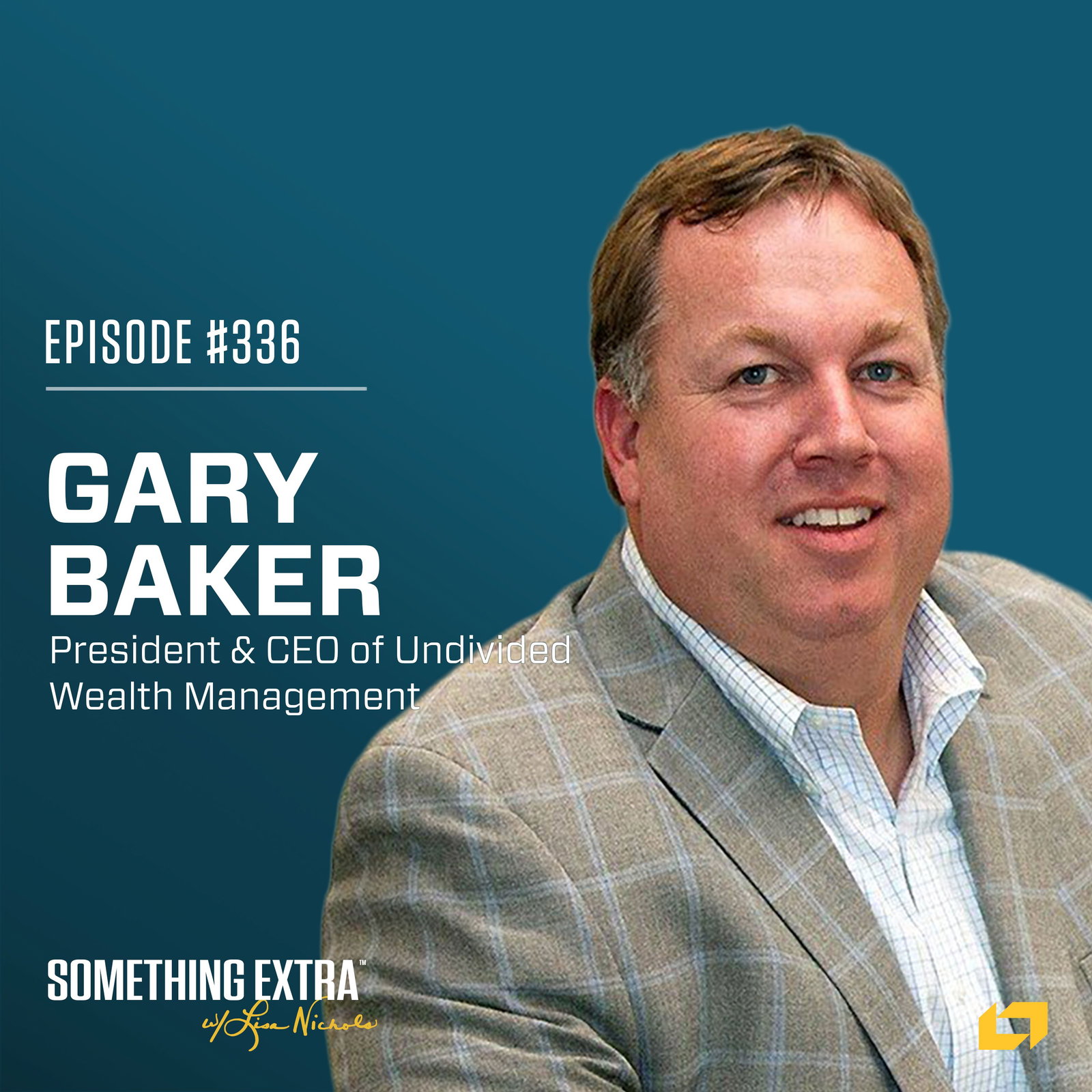
I'm thrilled to have Gary Baker on the show today. Gary is the president and CEO of Undivided Wealth Management. Gary Baker, I am thrilled to have you on the Something Extra podcast today. Thank you, my friend. Thank you for making the time to be with me. Gary Baker
Absolutely. This is, something I've been looking forward to a long time, so thank you very much. Lisa Nichols
Yes. Me too. Well, you and I go back, way back to twenty thirteen. Do you remember how we met? Gary Baker
I do and there's just a a mini story before we even met, which, you know, takes us out of the country and me meeting your son and and all of those things. And so if if you want to, I can take a little trip down memory lane and kinda share that story because I love talking about your son. Lisa Nichols
Yeah. Absolutely. What was the trip for? You can maybe tell our listeners a a little bit about that organization if you can because they may not be familiar. Gary Baker
Sure. So so one thing that I realized early on in my career is you know, of course, I wanna help people. I wanna understand cultures, different people, and so we were connected with a group called Opportunity International through one of our mutual friends, Rich McClure, and they were doing what they call an insight trip, which is where you go down and kind of visit the culture, understand their business model, what they're doing, etcetera, just so you can start to understand what your contributions and, you know, what you're what you're trying to do to help them. And so you and Greg were supposed to go on the trip, and I was excited because Rich kept saying, wait till you meet Lisa Nichols. She's this dynamo person, you know, which which I was excited. And then, obviously, unfortunately, something was going on with Greg's father at the time, and so you guys decided to substitute your son, Jordan. Who was who was how old at that time do you think? Lisa Nichols
Well, that was twenty thirteen. Oh, now I have to do math. He was early twenties. Yeah. Like, maybe twenty one, twenty two. Gary Baker
So at that point in time, Sarah and I just had our first son. And, you know, you always wonder when you have a baby, like, what do they turn out to be? And and Jordan is full of life in many ways. I mean, he's a great looking kid. He has a great personality. He has all of these interests. It's one of those kids that has the possibilities to do anything, and so when I first met him, that's my initial reaction. And then over time throughout the trip, I felt like I became like we became like surrogate parents like, Jordan, I know your parents aren't here. I don't know if I would do that if I were you or make sure you're home by ten thirty. And he's probably like, who the heck are you? Like, I just met you. So I became like his like older brother and but he is just such an awesome human being and person. And so when I got back, I just I said I have to meet these parents. I have to meet the person the people who produce this great human being and so that's where we met in your office. Lisa Nichols
Yes. I I remember that, and we had talked about this. We had never met doctor Tom Hill before. Lisa Nichols
And you brought doctor Tom Hill with you, Gary, and a lot of people know doctor Hill. I have traveled to Denver. I have traveled to Dallas, and people know I've got a good friend in Michigan. He's like, hey. Do you know Doctor Tom Hill? I said, I sure do. You know? It's just crazy. But Opportunity is a great organization. Greg and I are still on the board of Governors. If any of our listeners want to learn more about that, I will tell you the one thing about that organization, Jordan came back. So these Opportunity really helps with micro financing for entrepreneurs, right, in developing countries, Gary. And but what they do that's very different are trust groups. So if you have got a loan from Opportunity, you are in a trust group with ten other people, and Gary and I are in a trust group. If I renege on my loan, Gary has to pay my loan back. Well, guess what? Everybody pays their loan back. Gary Baker
Yeah. It's incredible. And I'm gonna take it even a step further if you don't mind, but correct me if I'm wrong too, but the majority of their trust groups are actually made up of women because women want to provide for their families. So if they're making extra money, they know it's gonna go to the family, not towards, you know, whatever else it could be spent on. And one of the stories that they shared with these trust groups is that one of the ladies actually had her loan payment, but the husband took it and went down to the local bar or something and he was spending it, so these ten ladies as a trust group said, nope. We got a loan payment to make. They went down to the bar and got the money back from him. I mean, that's how powerful these trust groups are. I mean, they and the courage, I should say. So not only Gary Baker
Is it leveraging knowledge and insights, etcetera, but it it gives them a branded collaboration around courage and and and it's powerful. Lisa Nichols
It is so powerful. And I just remember Jordan coming back and saying there was a major difference. He saw the entrepreneurs that were part of opportunity and ones that were not. He said there was a big difference, you know, in, the success of those. And so, yeah, it's a powerful if any of our listeners want to learn more, Gary and I can definitely connect you. Gary Baker
You know what? And if you don't mind, let me because I think this is important, since you're taking me down memory lane. One thing that I noticed about Jordan, which was profound to me, is I'm I'm one of those people who likes to get involved, but I kinda sit there and watch and listen and learn and then eventually I will engage. He he was friends with everyone on the first day. As soon as he walked in, I mean, of course, you know, they're talking to him, they're playing soccer with him, he's sharing like clothes with them, I mean, he has zero fear to immerse himself in the culture to learn and they accepted him which was awesome and I just remember thinking, how does he do that? Like how does he have the courage to just step out of his own coverage? Language barrier, cultural barriers, you know, monetary barriers. I mean, there's no barriers with someone like Jordan. He just immersed himself in in what's right and and that probably was what now I think about stands out to me stands out to me the most about him is just how comfortable he was immersing himself right away. And so you do learn a lot about cultures and to your point, if you're gonna take a trip like that, you know, don't be afraid to truly immerse yourself in there because that's how you really grow and learn.
Lisa Nichols
Yeah. That's good. Well, thank you for that, Gary. I'll make sure that I share this episode with him because I know that that will, fill up his tank. So thank you for that. You know, but I just remember you, Gary. I mean, from the time that we met, you are this passionate, humble, incredibly brilliant servant leader. We've talked about this. You're very people you're a people centric leader. Yeah. I want to dig into all of that, but before we do, just take me back to a day in the life of Gary Baker as a young boy. Now were you a mischievous boy, kind of like Jordan and Jack, or were you a studious boy?
Gary Baker
So, so how far do you wanna go back? Do you wanna go to like, you know, junior high, high school kind of going back that far?
Lisa Nichols
Yeah. I mean, what would you like to do? What kind of what kind of were you a good student? Were you, you know, tell me a little bit about you.
Gary Baker
So, it's it's funny that you bring this up because I've just done some some writing about this aspect of my life, and so my my parents actually had me when they were eighteen and nineteen years old, and so they were very young parents, and my dad actually owned two bars. So I grew up in this environment that was uncertain, chaotic, not what I would call, like, a normal childhood.
Gary Baker
And so but it was normal to me, and I had a lot of adult conversations, I got to see a lot of humanity, sometimes at the worst, sometimes, you know, just the just the realness. And so you learn how to navigate those things and understand where people are coming from and how to navigate conversations in quotes or, you know, a lot of different kind of unique environments to say the least. But what that did was it teach taught me a lot of, you know, just how to be resilient, how to be persuasive, how to understand, how to seek with empathy, how to live with empathy, to realize that, you know, not everybody has the plain vanilla white picket fence, you know, two story, you know, when a, you know, four kids and a dog, you know, four people and a dog kind of scenario. But I never knew the difference. Because one thing that that I have come to believe, and I I try to not that I'm some great wise old parent, but I'm forty eight now and my kids are getting older. One thing that I never doubted for a second was that my parents loved me. And so I realized that regardless of circumstance or environment, if you feel love or appreciation or support, you could literally endure anything. And so in high school, I became very outgoing and I I but I was outgoing in the sense that I was curious about other people's lives
Gary Baker
just wanted to get to know people. So I didn't hang out with a clique even though I had my little, you know, sports group and, you know, I was a baseball player and all of those things. I literally got to know everyone or tried to get to know everyone. And I and as a kid, you don't do those things because you're trying to achieve something or get something. It's just who you are. Mhmm. And so I realized at a very young age that I definitely was a people person, but I cared about people and hearing their stories and getting curious about, you know, what they want to do and and how do they want to accomplish things or whatever it may be. But this is what the difference was. Because I grew up in an environment like that that caused me to have, you know, quote, kind of, you know, grit, you know, just that level of, grinding and and resilience and all those things that we need to be entrepreneurs, etcetera. I learned that at such a young age that it became like one of my superpowers in my twenties because most people, if they live a normal plain vanilla life, they're not used to disruption, they're not used to chaos, they're not used to uncertainty, and so when they have that chaos. They're not used to uncertainty. And so when they have that drop in their lap for the first time, they're dealing with it sometimes for the first times in their twenties and thirties. And I'm thinking, like, this is a Tuesday for me growing up. So, like, this is nothing. And so I just realized, like, what what arguably could be something is is my you know, someone will call a setback or, you know, or or, drawback or whatever it is of this kind of, you know, chaotic childhood. Be actually I'm I'm grateful for it because it helped me learn a lot more about life. So much so that I actually wanted to be a psychologist because I wanted to help more people understand they can overcome adversity no matter what the circumstances.
Lisa Nichols
That's so powerful. Oh my goodness, Gary. There that's so powerful. We could peel back the onion. There's so many things in there. You talked about, you know, it may be a little bit uncertain, you know, a little bit a non traditional, type upbringing, but your parents loved you. And there are studies out there that say even if a child has one parent or one person in their life that loves them, it makes a world of difference in their life and who they become. So, you know, I think love and a goodness gracious, boy, I mean, we could do a whole podcast on the mistakes that I made as a parent. I've made so many mistakes as a parent, but I have said to people at the end of the day, just make sure that you're loving your kids. Love your kids because I feel like your kids, no matter what it is that they're that you're that they're going through, they've got to know that somebody's in their corner.
Gary Baker
And and and the beauty, I know it sounds kinda cliche, but love's free. So it doesn't matter what school they go to, it doesn't matter that you can buy them a car at sixteen or, you know, whatever these things are. And of course, you know, I wanna do those things for my kids, but on the flip side, I realize as a foundation, as a human being, that's all they genuinely need and then they can figure out their own lives, they can accomplish things they want to, but to your point, we've also seen when you have the absence of that, you will fill that in with something else.
Gary Baker
And and that's where, you know, that takes a lot of unwinding and so as much as the world was chaotic, I will always be grateful to my parents that I never doubted for a minute that I was loved in chaos.
Lisa Nichols
Yes. I love that. Well, I think that's gonna give people hope and then just, you know, talking about I love too, Gary, just that you had lived in chaos and you had learned how to navigate that at a young age. So we may have a listener out there that feels like they're living in chaos right now, but don't despise that. Is it hard? It absolutely is, you know, and sometimes just literally it sucks, you know. Life can suck sometimes, but don't despise that piece because something's being worked out in you that I think will eventually come out to possibly help you in the future and to make you a stronger person. So, there's just so much about what you said I love, but you went on to Mizzou to study personal finance and then received your MBA from WashU. Now you're teaching there as an adjunct professor. I wanna talk a little bit about that, but what, Gary, drew you to personal finance, you know, and what has kept you in it?
Lisa Nichols
over twenty five years or however long you've been in that.
Gary Baker
So, there's I I'm starting to develop at least my own personal formula. I don't know if this necessarily applies to everybody else's life, but there's a personal formula. So you you have the love foundation, and then with that love foundation, you can kinda get this encouragement from your parents. I got a lot of encouragement from doctor Hill. That's what I refer to him as the great encourager because that's what he does. He tells people like, dream as big as you want to, and he's right from that standpoint. So you get love, you get encouragement. But then I wanted to help people. And so I told him my grandfather wanted to be a psychologist, and he said, well, you know, there's a lot of ways you can help people. And I would go to his place or his house on the weekends and do like chores and things like that, and we'd always talk about the stock market and business and leadership and things along those lines. And so, he said, well maybe you could be a financial advisor because you like numbers and, you know, the markets and all of these conversations we've had. And he said, why don't you have a call with my financial advisor? So at eighteen, I'll never forget, I was staying in his kitchen, he handed me the phone, and he said, Gary, you know, I appreciate the fact that you want to be a financial advisor to, you know, because you like the markets and the numbers and you know, all of those kinds of things, but but I just want you to know that most of the days I feel like I'm a psychologist, not a financial advisor. And I'm like, home run, this is it, this is like, if I can merge those worlds together to where I can help people with the math and the numbers and, you know, the markets and the economy and all the things that I find interest in, but I also can still help people at a, you know, even to a certain degree to a psychological level. I'm like, this is, this is perfect. And so I'll I am so grateful that, you know, that he was available. And this is where it just goes to show you, like, I I hope people become mentors and and reach out and have these conversations when young people reach out because you just don't know the impact that you could have. I mean, but that was a true trajectory changing moment. And so my pathway became easy. Learn about the markets and investing and learn about people and just keep on following those two engines and here we are twenty eight years later. So the personal finance was easy.
Lisa Nichols
Amazing. That was a pivotal point for you. Your path became clear at that point. I love that. Well, you've worked in a lot of big, big institutions and we'll we'll talk. I've got a question about that, but you founded undivided wealth and I just want to know, like, what sparked that leap and I think, you know, I know what it is, but I'd love for you to tell our listeners and it goes back to a lot of what you just talked about and being able to help people.
Gary Baker
Yeah. And so what what you'll hear a lot of financial advisors talk about when they meet with their clients is they say, we talk about the markets or what's going on in their portfolios, etcetera, for about ten minutes, and then we start talking about their life for the rest of the time. And and that that's a very true statement. And the reason why you only talk about ten minutes is because most people think, well, I don't know that. I don't care to know that. That's why I'm actually working with you so you guys can figure those things out. And I don't wanna be bored for the next sixty minutes or ninety minutes or whatever it is.
Gary Baker
But then what happens is, this is also a unique factor of being a financial adviser, is it's one of the occupations that you actually meet with a client, at least, you know, on a quarterly basis over a long extended period of time. So when you meet somebody over a quarterly basis, over a long extended period of time, and they're talking about something that's very private and sensitive to them, their money, they're also open now to talk about everything else that is going on in their life and anything that they want to do that has real significant meaning, at some point in time is gonna cost some level of money. So it starts to bridge that gap, you know, funding education, you know, just whatever the it may be. And so what I realized is, well, what our industry is missing is the people part, the the human part. And so if back to that time, we're spending ten minutes on the financials, great. Nail that, be a black belt in that, understand it. But then also nail and be a black belt in the things that matter most to them, which is the other sixty minutes. So if you can get become skilled at understanding who they are, why they exist, what they want to accomplish, where they want to accomplish it, what do they wanna leave back. If you can actually become a guide on that side of the equation in addition to the monetary guide. Well, to me, that's the dream. To everybody else, it's like, whatever. Glad you're happy doing that. But, I mean, that's been my dream since I was eighteen, and Yeah. Thankfully, I've just spun it into what it is today.
Lisa Nichols
I love it. I love it. Well, let me ask you this. You created the undivided experience center
Lisa Nichols
From scratch. I've been there multiple times for events. What was the vision behind that, Gary?
Gary Baker
So perfect. So, what I've always envisioned is I don't wanna help people think about life. I wanna help people live life. And so, you know, if you think about our building, you know, ten thousand square feet, twenty five hundred of it is the wealth management part. So we cover their investment plan, we cover their financial plan, and then in their financial plan they start to give us the things that they want to accomplish in life. Well, great. How do I do that? How do I start my business? How do I sell my business? How do I change my career? How do I, you know, you know, lead lead my company better? How do I give back to the community? All the how do I do and live the important things of life start to come up. Well then I said, this is great. Let's build an experience center that allows them to have a taste of that experience of something they want to do. It becomes like a catalyst. So if they wanna try something, great. Let's put it to the plan, plan, understand it, but then let's just literally walk out of our wealth management doors and into our experience center doors and put it into practice. Make a connection, launch a business, you know, change your career, meet with one of our life consultants or, you know, business consultants or what have you. Let's put it into action. So I care more about people what I care more about I do care about how much money someone has, of course. Right? And I want to grow that, of course. But I care ten times more what they can do with it and what that money can do frankly for others. So it's not even just what it can do for them. That's the first step. That's the success part. But the fulfillment part is, but what can that success then do for others? And that's when the fulfillment comes in. So if we can do all of that in one place.
Lisa Nichols
That's amazing. I love it. Well, you know, let's talk about this because you just talked about starting a business. So I mean, you really did step out, you know, with courage, you know, to start undivided because you, I think you were like at some big brands like Merrill Lynch, Wells Fargo. What was it like Gary to step out of those roles and start? I mean what what kinds of things were going on in your brain and your heart? I mean, was there fear there at all, or were you like, you know, what's the worst that can happen?
Gary Baker
So it's funny they bring that up. So one, while I was at some of those larger firms, of course they helped me become a great investment planner, financial planner, but it's just not their focus because of the training development that has to go into relational planning, life planning, business planning, etcetera. So it's just not a focus of what our industry does. So I realize at some point in time we can create a difference, you know, for our own value or for our own firms and then hopefully take it to the industry. And so, but I realized I couldn't do it on our own, or on my own, so we have one heck of a team, so they were all courageous enough to say, yep, let's let's go do this together. But the main impetus for for starting your own firm was so that we had the freedom to really open up this whole another lens of services. And and the problem is it's I mean, like I said, some of these larger firms do great at investment planning, financial planning. It's just they don't have the infrastructure, the training, development, you know, the the the lab, the innovation side. They just don't have the capabilities to do this real life development stuff that that, you know, we were focused on. And so we had to create our own kind of company to basically show that one, it's possible, which we've done, which has been an exceptional ride over the last five years. But it's all because of the team that we have and that they all believed in this vision. And so they used to tease me. I used to use this acronym called FIR, f I r, that everything, every conversation needs to be financial, intellectual financial value, intellectual value, and then relational value.
Gary Baker
And relational value to me is where the experience of life starts. So if you could relate to a client and then start to build a plan that relates to all of their, you know, monetary, you know, means, etcetera, now you're helping them do something with their money and live the life they want to. So it's been absolutely a team effort, from day one, and I'm just grateful for a million things that we're doing here, but that's one of the things I can't thank our team enough for having the courage to go do it because now back to my point. When I was a child and going through all of that, I mean, yes, I'm scared of things. I'm nervous around things, but I just don't have that fear of, you know, I don't have a fear of going from a one deviation normal, you know, predictable life to an uncertain life because I've already lived that. I already have that armor, that gear. So
Gary Baker
And that's where all the change happens. So for me, it was a no brainer to go do it. I was gonna do it anyway regardless, but I know with certainty it would have never happened without our team. And so thankfully we had some courageous team members that went on this journey with us.
Lisa Nichols
Mhmm. Yeah. I mean, the the the thing that really makes you guys stand out, I love the whole fur, you know, the financial, intellectual, relational, that whole I mean, the way that I look at it, Gary, when I think about it, it's a holistic approach
Lisa Nichols
To serving someone. It really is. It's a holistic approach, you know. Yeah. They
Gary Baker
And and I will say this and I do mean this and and this is something that's like most people that know me like there's certain hot buttons for me. I I agree with you. It is a whole person approach. It is a whole life approach. But this is the thing that I am I am, like, most passionate about and protective of is this, is back to the fur. You can lose money and go make more money. You know, you can go to school and learn a new, you know, you can the the industry can change or whatever it is and you can learn a new skill set, whatever it is. But relational means that you're getting someone's heart. And you cannot I can manipulate money. I can manipulate intellectual things. People do it all the time. You get into the business of manipulating hearts to make more money or create intellectual processes and you're going down a dangerous path because if you break someone's heart, they will remember that forever. But on the flip side, if you inspire someone's heart, if you motivate someone's heart, if you care for someone's heart and you genuinely can show that, that's a whole different level of relationship. And so I am overly protective of humans' hearts and our clients' hearts and what they are because my point is if you're gonna give me your greatest fears, your greatest dreams, your greatest visions, your greatest passions, your greatest doubts, concerns, whatever it is, one, I want our team to be experts on helping you with that. But two, I don't take that lightly.
Lisa Nichols
That is that is good. You know, and as you were saying that Gary, the thought just occurred to me, you know, you can inspire, you can break. Right? And in both of those scenarios, there's a ripple effect
Lisa Nichols
To that. There's a law of multiplicity that comes into play, and that can either be for good or for bad.
Gary Baker
Yeah. Now now you're gonna make me tear up because you you at least of all people on this earth, you get exactly what I'm talking about, and you know the core of it because you lead that way, and you've seen both sides. Yes. And and as a business owner and people, we have to make these decisions. And and culture matters and people matter. And this is why people trust you and follow you and all of those things. I hate to say it. And I know how smart Greg is too. So Greg is very smart. So maybe he he's the brains, you know.
Lisa Nichols
Smart yeah. He's he's brain. He's on another level.
Gary Baker
He's on a whole another level. But here's the thing. They wouldn't follow you if it wasn't for your heart. And that's where trust comes from because that's where empathy comes from. That's where authenticity comes from. They follow you, I follow you. We've been friends for, you know, fifteen years now or whatever it's been because of your heart.
Lisa Nichols
Yeah. Well, I appreciate that. Well, I tell you what, I've got lots more questions for Gary, but we need to take a quick break and we'll be right back with Gary Banker on the Something Extra podcast.
Ad
Hey there. In a challenging business climate like this, savvy leaders look to technology to find an edge. This can mean the difference between staying ahead of the curve or playing catch up. It's time to collaborate with the highly skilled experts at Technology Partners. Our Our team of technologists draws upon decades of experience for your project. With each bringing a passion for solving problems and a track record of success, how can we help you overcome your biggest technology challenges? Visit technology partners dot net to book a free consultation with one of our leaders.
Lisa Nichols
So welcome back, everyone, to the Something Extra podcast with my dear friend, Gary Baker. We have been having so much fun. It's just, been amazing, Gary, just to hear your wisdom, and, we've been talking about a lot. You know, your firm is really designed to help their your clients live exceptional lives, and we've talked about fur, you know, all of those, the intersection of all of those. But let me talk to you a little bit about leadership in your team because you do have an amazing team there, and you guys have received lots of accolades, innovation firm of the year, humanitarian service award, and I know that you were one hundred. So congratulations on that. But let me ask you, what is your philosophy when it comes to building high performance teams, Gary? How does it start?
Gary Baker
Oh, wow. So, you're you're asking a great question at a very interesting time in my life. So, I'm gonna break down my life into kinda two components. So the the first half of life, it was this kind of entrepreneurial person that takes a different type of skill set. A lot of those childhood skill sets that I needed, the, you know, resilience and just focus and drive and ambition and all of those things, that's that's what helps, I think, an entrepreneur, like, just get through all the stuff that they need to get through to get to a point to where they feel like they're a business owner. And once you become a business owner, it changes the dynamic to where now, to your point, which is dead on, it's not about you anymore. It's about the team. And it's about what the team can do. Period. And so to create a high performing team, and that that's what I love about where we are now as an entity. And so I may have shared this with you, but we recently launched our, life leadership and business consulting firm called Evoliation that is led by a gentleman named Paul Hott which has been a phenomenal experience for me alone because he is actually the one that is still training me on how to be a better leader, how to lead a high performing team, but ultimately how to build, a better company. And so it's great to have somebody that is right next door that is taking all of my kind of life planning, relational planning, principles, etcetera, but turning it into this overarching business model. And so, to be brief, what I have learned in the last probably twelve to eighteen months is that, first, you definitely have to have a sense of purpose and drive so that people can rally around it. The second part is once you have that in place, then the next part is you have to the the team has to have a personal connection to the purpose. Meaning it can't just be the CEO's purpose or the entrepreneur's purpose it has to be some way that you have to understand your team member's purpose and how their purpose is found in the overarching purchase. So there has to be like a center and then all circles around it kind of have to overlap. Mhmm. Because that's what you want is consistent, that's where engagement comes from. That's where passion, drive, all of those, you know, working later, working harder, etcetera, because you all want the same thing. So there's the next part. Then you get into that, you know, the notion of psychological safety, which means that it's a whole different environment than being an entrepreneur. An entrepreneur is about going fast and making a lot of pivots. A business owner is about going slow so you can go faster and arguably bigger, which means you have to voice concerns, questions, doubts, worries, all of those things. And so I'll give you a perfect example. We just had our strategy meeting two, three days ago and one of the people on the team openly shared, this is what I'm fearful of, this is what I'm concerned with, this is what's bothering me. And I told her afterwards, I said, I am so grateful that you shared all of those things because now I know what you're thinking on the inside and now we have to figure out a way to alleviate those concerns. So she was seen, she was heard, we got better from it. But that's what you need to slow down to make sure like, it's like you're building a foundation because you want the bricks and the mortar to stick. And And in order for it to stick, then you have to create that environment that you can make sure that you're properly setting the right brick at the right time without any hesitancy because everybody's on board. But you have to create the environment that allows that to happen. And then last but not least, you gotta get into accountability and responsibility. And accountability and responsibility is because we have a purpose, because your purpose is embedded in this, and because we have this zone of psychological safety to air out any of your concerns, any of your questions, any of your doubts, well then we all have to go to work. And you questions, any of your doubts, well then we all have to go to work and get our stuff done. And that's where a level of accountability and responsibility takes hold. But if you're feeling the sense of purpose, you feel like you're connected to where the company is going and and have the same kind of vision, etcetera, and you feel open that you can share your concerns, accountability and responsibility should almost be easy. Because the only reason you don't take accountability for something or responsibility is that you didn't do something in the first three tiers.
Lisa Nichols
That's so good. That is so good, Gary. Yeah.
Gary Baker
I'm telling you, Paul's good. Paul has treated you well.
Lisa Nichols
That is that is really good. I like that. Well, can you can you tell me this? I mean, you've learned, as have I, lots of leadership lessons. But what is one lesson, maybe, Gary, that you learned the hard way?
Gary Baker
Yeah. So, you know, you you only learn by reconciling the past and and taking all of, you know, the hardships. And so, again, as I mentioned before, back to my childhood, I'm fine with the ups and downs. I look at downs differently now. I look at at downs as absolute learning environments because when you're going down, you're only down for a reason. It could be external, you know, the markets, the industry, you know, whatever it may be, or it could be something going on internally, but that actually is a healthy thing because that is where you're basically reviewing the foundation of what your future growth is going to be built on. So in a strange way, I avoided negative situations or downturns because I thought it slowed down the process and when I was an entrepreneur that's probably half true. But now that we're more of a business owner kind of mindset, I am constantly seeking those cracks in the foundation or what we're missing and how do we need to speculate or whatever we mean to do, which means I have to have more patience and grace and understanding and go slower. And by doing that, I actually get to listen to people, hear their opinions, hear their thoughts, which is it's it's exceptional to hear what other people's ideas can do to fill those cracks. So it's not even like here's a crack and now I have to go fix it. It's here's a crack, how do you want us to fix it? And then they take ownership and responsibility in that. And so what I've learned is when you go fast, in theory you may get a little bit further, but you miss everything along the road. It's like when you're driving eighty miles an hour down the road, you know, everything's just whipping by you and you never get to see the sights or have the conversations because you're just so focused on the destination. And on the flip side, when you're going twenty, thirty, forty miles down the road, you get to slow down. And even if you get into the passenger seat or the back seat, you get to see everything, you get to have the conversations, you get to learn about people. And so and and there's a a mix of this and it kind of gets into something that, you know, we were talking about just on the break of leading this exceptional life. And and I'll just liken this to also leading an exceptional company. That the best way to help live an exceptional life and build an exceptional company, be an exceptional leader is the combination of success and fulfillment. So self success is drive ambition, it's the accolades, it's the awards, it's the monetary value, it's the results of doing the activity, you know, success or failure. Fulfillment is everything you get along the way. It's everything that you even overcome along the way or experienced. And one of our good friends, John O'Leary and I were talking about our business, and I texted him about three years ago, and I and because we joked that we're building the arch, like, he builds one side, I build another side. So for his side with his movies coming out is going a lot faster than my side, so I gotta really pick it up. But what I asked him was I said, you know over the last ten years of us sharing all these war stories like did you enjoy it? Did you have fun? And he said, of course I did. And at that moment like I really didn't and it was because I was so focused on success I missed all the fulfillment. And so this back half of life, I will absolutely trade success for fulfillment because oftentimes I found myself successful by myself. I found my success, you know, without other people or just what I wanted. And I'm like, I'm not spending the next ten, fifteen years of my life alone and just what I want. And I'm frankly enjoying hearing from other people and learning from other people and growing our team and watching what they can do. And so that that exceptional part of the thing and, you know, even part of your, you know, something extra, do not lose sight of the fact that fulfillment should be equal to, if not even greater than success. Otherwise, that success will not be worth it.
Lisa Nichols
Yeah. That is so rich, Gary. I mean, because success without the fulfillment part is not an exceptional life. No. I mean, how many people do we know that the success, they've got all the accolades, they've they've got to the top, you know, to the summit, if you will, financially, all of these things. But if if you get there and to your point, there's no one that you've brought along with you, I mean, that's I it's not an exceptional life. It's not a fulfilled. So I love talking about not just the destination. Right? But it's enjoying the journey along the way, and I think that that's what John was talking about. So I I love love that and could not could not agree with you more in that. But, you know, sometimes it is a little bit of an oxymoron, though, don't you think, Gary? Because so many leaders, they wanna go fast. It's like charge harder, charge harder, and they don't take time. It could kind of, a little adage or a little saying along the way, take time to smell the roses. Take time to smell the roses along the way.
Gary Baker
And see and this is where I don't know this for certain, but this is absolutely what we're focused on, you know, with our companies, is if you chase success with the hope that you get to fulfillment, which to your point of smelling the roses is, they say take time, you know, like a marginal amount of time to smell the roses, but then you miss the whole rose. So my point is is if you change your mindset to say, I wanna have success so I can be fulfilled, I don't know that that actually is gonna happen. However, if you can become successful at being fulfilled, it is actually and I'm living it and seeing it in the last couple of years, it's actually amazing to see how you actually get more success. It's just different. It's just different. But it's so I I just I wanna be successful at being fulfilled.
Lisa Nichols
I love that. That's that's beautiful. That's that's that's beautiful. So let's say that again if we can. So if you are hoping to be successful so you'll be fulfilled, It's really about being successful at being fulfilled.
Gary Baker
That's it. And then I'm gonna Is that
Lisa Nichols
right? Yeah.
Gary Baker
And I'm gonna take it a step further. So so think about it as a as an equation and kind of like an infinity cycle to where you have success on one side and fulfillment on the other and you want that infinity loop to just be going back and forth and kind of feeding each other. Mhmm. Well, the cross line in the center is your purpose. So if you lose sight of your purpose, your fulfillment bucket starts to get siphoned off, and that's what happens. It starts to to get smaller and smaller because the purpose starts to become monetary value, you know, something else, and any person that has a true purpose of that that leads to fulfillment, this is the difference, because I can have a purpose of making more money, well that's just more success, but if I have a true purpose of becoming fulfilled, the only way you get fulfillment is by serving and helping other people.
Lisa Nichols
Amen. That's a mic drop right there. You know, Gary, that is a mic drop. Because that for me, I'm like, it's really not at the end of the day, it's about at the end of my life, it's gonna be, like, how many people, you know, did I make an impact on? What's the difference that I made in people's lives really? You know, it's gonna be the the currency, I think, you know, that we need to be looking at at the end of our life.
Gary Baker
I I appreciate that. And I'm gonna take it two steps further just to to honor you because I, you know, I want your listeners to know that, I think they know that, I want you to know this that I mean Lisa in Saint Louis, you're like, you're the example of that. I mean, I know like your business goes through ups and downs, that's the success measure. But what you do for other leaders, and I see how much involvement you have in different organizations, that's your fulfillment bucket. What people admire you for isn't technology partner success. What What they admire you for is your focus on fulfillment, which, of course, leads back to success. You are running that infinity circle better than most people I've ever seen because you stayed true to your purpose and your faith. And so that's what people are attracted to. It's like, how does she have success and fulfillment without actually saying those words? That's basically what they're saying. And you get to live it every day. And that's how most companies, I think, should be led. That's the focus of, you know, evolution and what we believe in is is be successful so that you can be fulfilled. But the only way that you're going to do that is be successful at serving and helping other people. And that's the formula.
Lisa Nichols
Well, thank you for that, Gary. Thank you for that. Yeah. That was those were very kind words. I appreciate it. So you mentioned faith, and that is one way that you and I a big way that we have connected. So let me just ask you this. How has your faith guided you in both your business, your leadership, and, you know, the legacy that you wanna leave in this world?
Gary Baker
Well, this just kinda hit me. So, I'll tell three stories to kinda summarize my my life in, like, three phases. So when I was younger, I did not have faith in my life and I just had to figure out life, but I found faith in other people and I didn't realize like a lot of the people who took me under their wings or allowed me to stay with them or, you know, was my baseball coach or whatever it is that they did, I didn't realize that most of those people were faith filled. And that's why they were doing it because that's just what faith filled peoples do. So like those faithful people helped me grow into the person that I am today. Like every time I'd go to my grandparents house we'd also go to church, you know, or they would talk about it in some way shape or form. They weren't religious people at all, but it was a part of their routine. And so, faith filled people help other people, like I just said, it's it's the part of the process. So, going to a bible story because I didn't have faith growing up, didn't understand the bible, didn't know how to pray, didn't understand any of those things so, when I really came to faith was the story of Lazarus where you know it's Jesus' friend and when he found out that he had passed he wept.
Gary Baker
That's when I realized that when I was having my worst nights, you know, as a a kid that I would say, you know, I wouldn't wish this on their wish this on, you know, my worst night or my worst enemy. Not that there were horrendous nights, like I said, I was always fine, which is a blessing in some way. It's just the environment was chaotic. But I would say, you know, I wouldn't wish this on my worst enemy, and I would think, why am I doing this by myself? How am I by myself? Well, it's just because I didn't have faith and I didn't know that Christ is really sitting there right with me. That he is equally weeping with me saying this isn't right, this isn't who you are, this isn't what it's gonna be about. But if you don't know him, you don't know that he's sitting right there next to you. Mhmm. And by hearing that story and every time I hear the story of Lazarus I realize he's weeping with us when we're going through those hard challenging times. And so faith started to become a part of my life. Then growing, you know, in the twenties and thirties and, you know, I started to realize, okay, this business model and quote and when I put on my entrepreneur hat could be successful. And and every time that I lost my way, it's when the dial of purpose left serving somebody else and went to growing the business model or growing the the, you know, the product or the model or the tool or the thing that I was doing that didn't have to do with people. Mhmm. That's when I when I took the dial off of purpose, that's when I would find myself alone. Because it was about me and what I can create and what I could do and my ego and all of those things and I realized, okay, I didn't know what was happening. Now looking back, I do. And that's where by having that benchmark of faith in your life, that would always bring me back to what this is about which is serving people. And so now you get to this last stage or this next stage where I am now of this success and fulfillment. God gives us all, gifts, talents, all of these immeasurable, you know, things that we can do. He does not, I mean I can say this with the level of certainty and anybody I think who has you know, in the sense of faith it just doesn't make sense logically, he only gives you those tools so that you can serve other people, so you can help his people.
Gary Baker
And therefore the more people you help, the more fulfillment you come from it, the more tools and skill sets he gives you. So so now in this next phase, I'm never gonna learn lose that that dial of purpose of serving other people And I will always just rest on my faith that when I'm going through downturns or dealing with frustrations or, you know, just different situations I may go through, I know that I have my faith right there next to me. I know when I'm losing my compass is when I take my eye off of serving other people. And I know that the end goal of anything that we build will be measured in how many people we've served not in the mandatory value that we've created.
Lisa Nichols
Yeah, that's so good Gary. That is so good. Yeah. I always say my faith is what keeps me centered.
Lisa Nichols
That's what keeps me centered. That's what keeps me grounded because my purpose is found through my faith and and that is Jesus came to serve. Right? Not to be served. He came to serve. He was the greatest example of that. And so I could not agree with you more when you when you lose sight of that, then that is when, you know, you get really off balance and yeah. So my faith is what really keeps me grounded and centered.
Gary Baker
Well, and this is where, like, I'll just share, like, our individual stories. So you see, like, timing of faith and how it just shows up. So I didn't have faith growing up, but I got I I received resilience and all of these other kind of tools. So now that I have faith, I can utilize all of that that kind of, you know, tools to help other people, you know, navigate their their kind of downturns in life and the things that they're going through to help them kind of center to to find faith or to do whatever. But the beauty is is I also receive my faith by watching someone like you and, you know, and I do hope you really understand like the the meaning you are to me and to probably all the people that you've interviewed and you're around. You were given a gift that your faith came to you early.
Gary Baker
And you stuck with it though to live it. That's what the courage is is you receive the gift early and then you stuck with it so that someone like me could receive the gift of faith later on in life, but then have a pathway to follow of what does it look like to live. And so that's how the world's supposed to work. We learn from each other.
Lisa Nichols
Amen to that. No. I always say we we were creative for community and we do. We learn from each other. That's why I love this podcast so much, Gary, because I get to have amazing people like you on and then get to share you with everyone else, and we learn from each other, no doubt. Well, I've got just a couple more questions for you. You're an adjunct professor now at WashU. You earned your MBA. How does it feel now to give back in that way to your alma mater?
Gary Baker
Yeah. So I'll I'll tell you a funny story that when I went to get my MBA there, again, I was on the success track, which I wanted to get in there, get my MBA as fast as possible, and then leave. And my point is is I didn't walk around campus, I didn't get to know a lot of people, I just wanted the degree so that I could show, like, I have some level of intellect or I have some validation or I have something or needed something to put on my wall. And and I did want to learn, and I did learn a lot from the school, but I didn't soak it all in. And so now when I leave class, I end up talking to students for an hour and a half, you know, sometimes after class, because I'm soaking every minute of it in. And when I walk around the campus, sometimes I'll just look up at the buildings and the architecture and everything and go, I can't believe I get to teach here. It's it's amazing. But I also just reflect on, I can't believe how much I missed when I actually was here as a student. And so back to that success and fulfillment, that's one thing I definitely remind the students in our classes. Don't miss every single thing that's around you in these moments because you're never gonna get them back. And so I'm just grateful that I have appreciation for the building and the environment and, you know, and ultimately what I get to do now with the students.
Lisa Nichols
Mhmm. Well, I was gonna say, you know, what are you what are you teaching the students? And I bet that's what you're teaching them, Gary, is not to miss, you know, to to slow down and just appreciate and enjoy the journey. Right?
Gary Baker
You nailed it. And and so it's a leadership class and it's around, like, relational intelligence, but this is how I kind of position it is is I really believe that leadership is taught the wrong way in our society and this is what I mean by that. Is leadership is basically external which means you can go into Barnes and Noble's or, you know, Amazon whatever and buy ten leadership books. And those are ten people who are flat out googers on their respective topics and content, etcetera. But they're trying to get you to believe in their version of leadership or for you to understand like how you can apply these different aspects, you know, their their topics to you. Well, if you don't know who you are, you don't even know what to apply. And so I teach leadership from the inside out. Mhmm. What I mean is is I will spend two thirds of the class helping them understand every single thing that goes on inside their history, their generational influences, their parental influence, the societal influences, the forms of value that we're all chasing, their mindset. I want them to understand that they need to understand who they are and then they write this in a document, it's like their own constitution. And if you think about this, there's been I think twenty seven amendments to the constitution. There's been eleven thousand proposed. So if our country Wow. If our country doesn't have a document, I'm not saying it's the best document, it's a working document, it's, you know, continues to improve, but it's a pretty sound document that if we have this document, eleven thousand have to go through this document or this filter and it only produces twenty seven changes in someone's life. On the flip side, if they don't have that filter or that document for themselves or our country, there's eleven thousand proposed changes and life just becomes chaos. And most people are living in chaos because they're getting eleven thousand things of ways to live their life or eleven thousand leadership, you know, tactics, techniques, or whatever it is to be a better leader. And they don't know what to apply it to because they don't have their constitution. They don't have their leadership guide.
Lisa Nichols
Yeah. They don't know who they are. That is an amazing metaphor. That is an amazing I love that. I won't forget that, Gary. Well, let me ask you this. This is called something extra. What do you believe is the something extra that every leader needs?
Gary Baker
That is the easiest question to answer on the face of the planet. You just have to love people.
Lisa Nichols
Yeah. I I I believe that. You've got to genuinely love people.
Gary Baker
That's all that matters. That's all that will matter. That's all that will be remembered. It's it's the closest thing to Christ that we can get and live on this earth, and it's the thing that matters the most to every other human being on this earth.
Lisa Nichols
Mhmm. Mhmm. He was the perfect model for that. Right? Gary too. He gave everything.
Gary Baker
No more leadership books. Just read the Bible.
Lisa Nichols
Just read the Bible. He gave everything because of one thing, and that was love, his love for us. So, my friend, this has been so good. I appreciate you so much, and we just we just need to spend more and more and more time together. That's what needs to happen.
Gary Baker
Well, I you you need to stop doing so many things in the community and slow down just so you can, like, be, you know, in one place for more than thirty minutes. So this is about the longest. I've known you for fifteen years. We talk all the time and it's, you know, five minutes, you know, five second text or whatever.
Gary Baker
But I loved it. I look forward to it. Lisa, you are a fine human being and I'm just grateful to have you, in my world, so thank you for being you.
Lisa Nichols
Absolutely. Thank you, Gary.
Announcer
Thank you for listening to today's show. Something Extra with Lisa Nichols is a Technology Partners production. Copyright Technology Partners Inc two thousand and nineteen. For show notes or to reach Lisa, visit tpi dot co slash podcast. Don't forget to leave a review on Apple Podcasts, Google Play, or wherever you listen.